
What a Technician Usually Finds on These Calls
The call usually comes in the morning after a windy night. The homeowner heard the garage door rattling, banging, or flexing in the gusts, and now it's either stuck, dragging on one side, or visibly bowed outward between panels. On inspection, it's almost always the same pattern: rollers that have worked loose from years of use, a track that's slightly bent from age or a minor bump, and weatherstripping that's cracked or pulled away, leaving gaps where wind can get a grip on the door's edge. None of these issues cause trouble on a calm day. Under sustained wind load, they become the weak point that lets the whole door flex, pop off its track, or in worse cases, blow in.
Why the Garage Door Is a Home's Weakest Wall
Every other exterior wall in a house is a solid, continuous structure. The garage door is the opposite: it's the single largest opening in the building envelope, made of thin metal or composite panels, held in place by a track system and a handful of hinges and rollers rather than a wall frame. When wind pressure builds against a closed garage door, that pressure doesn't just push on the door, it transfers through the panels to the tracks and the opener's drive mechanism, none of which are designed to act as structural bracing.
If the door fails or buckles inward, wind doesn't just enter the garage, it pressurizes the entire space from the inside. That internal pressure then pushes up and out against the roof and walls, which is a major reason failed garage doors show up so often in wind and storm damage reports nationwide. It's the same logic homeowners here already apply to earthquake retrofits: the garage is frequently the most under-braced part of the structure, and it's worth treating that way for wind, not just seismic load.
Why This Matters More Here in the Fall
Late fall is Santa Ana wind season for this part of the coast, and this year is no different. These offshore wind events can hit with little warning, arrive dry and dusty, and put sudden lateral load on anything exposed, including a garage door that's been fine all summer. At the same time, the first winter rain of the season tends to show up in this window too, which means homeowners are often dealing with wind and water stress on the same door within a few weeks of each other. A door that's been loosening gradually all through the dry season, with dust working into the tracks and rollers, is exactly the kind of door that struggles when the wind finally picks up.
Pre-Storm Checklist
- Check roller and track alignment. Open and close the door slowly and watch the rollers. If they wobble, skip, or the track has any visible gap or bend, that's a failure point under wind load, not just a noise issue.
- Tighten hardware. Hinges, track brackets, and the mounting bolts for the opener rail loosen gradually from daily vibration. A seasonal check with a wrench is cheap insurance.
- Inspect weatherstripping. Cracked or brittle seals along the bottom and sides let wind-driven rain in and give gusts something to catch. Replacing it is inexpensive and worth doing before the rain picks up.
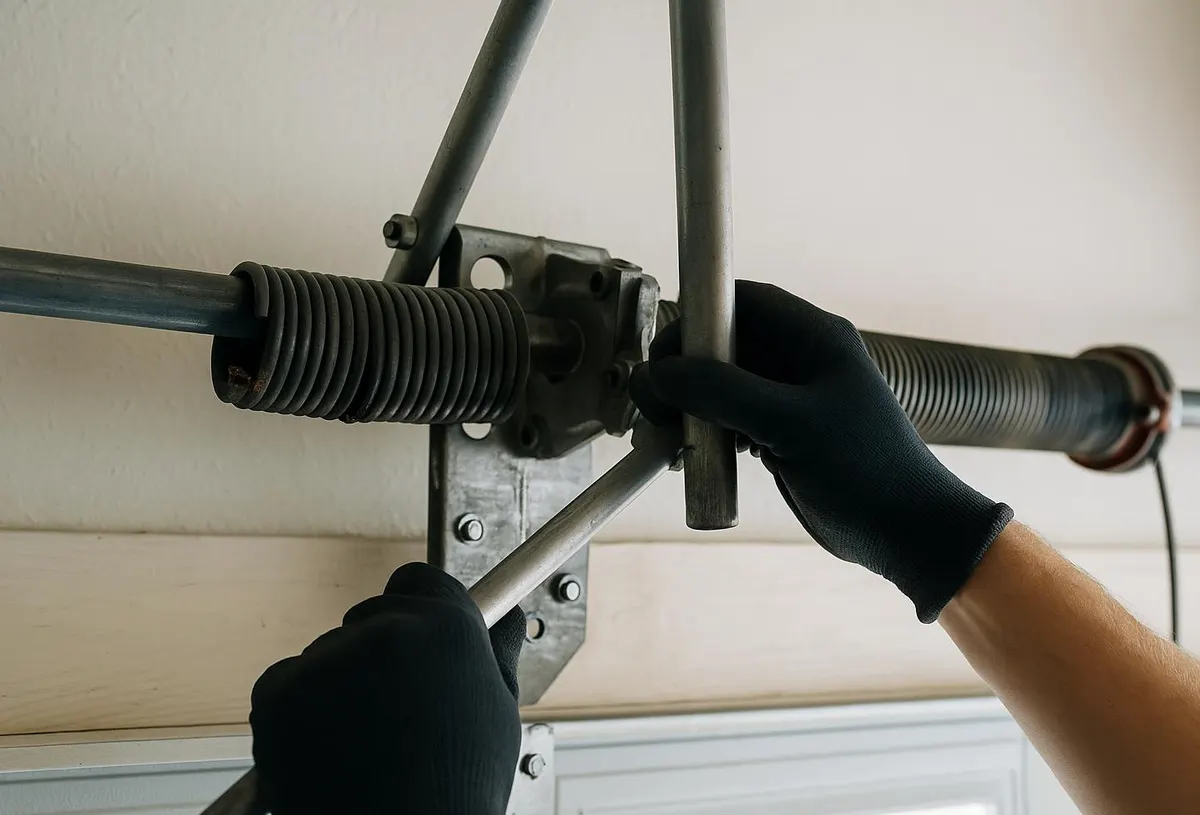
- Test spring balance. Disconnect the opener and lift the door halfway by hand. It should stay put. If it drops or shoots up, the springs are out of balance, which puts extra strain on the opener and tracks exactly when you need them to hold steady.
- Look at the bottom seal and slab drainage. Standing water at the threshold during a heavy rain event can seep under the door and, over time, corrode the bottom panel, especially on doors facing prevailing weather.
- Confirm the opener has backup power or a manual release you can reach. Storms here often bring power flickers; knowing how to manually release and secure the door matters if the opener loses power mid-storm.
Reinforcement: Retrofit or Replace
For an older steel or wood door without internal bracing, a horizontal strut reinforcement kit is a reasonable mid-range option that stiffens the panels against wind flex without replacing the whole door. It's a sound trade-off for a door that's otherwise in good shape. For a door that's already older, dented, or showing rust from years of salt air near the coast, a full replacement with a wind-rated or heavier-gauge door is usually the better long-term move, since you're also getting new rollers, hardware, and seals in the same job rather than patching an aging system piece by piece. National pricing for wind-rated residential garage doors typically runs from the low thousands into the mid-thousands depending on size, material, and insulation, while a reinforcement kit is a fraction of that cost.
When to Call Long Beach Garage Door Pro
If your door rattles noticeably in wind, won't stay balanced when lifted by hand, or the track shows any visible bend, don't wait for the next storm to find out how bad it's gotten. Long Beach Garage Door Pro can run a full garage door maintenance check, tightening hardware, realigning tracks, and replacing worn weatherstripping before conditions get worse. If the springs are off-balance or the door itself is aging and no longer worth reinforcing, our team also handles spring replacement and full garage door installation with wind-rated options suited to coastal and inland properties alike.
Get your garage door checked before the next Santa Ana wind event or the season's first real storm. Call Long Beach Garage Door Pro today to schedule service anywhere in Long Beach, CA.