
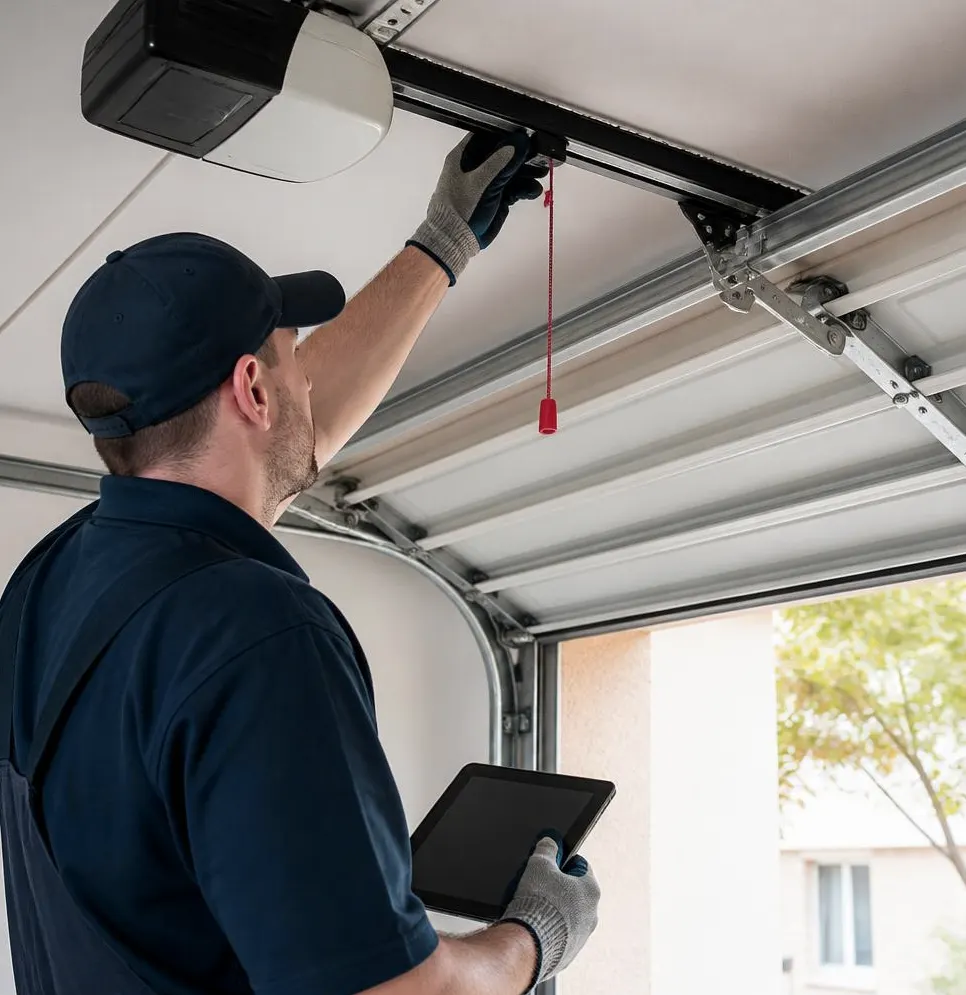
What a Technician Sees This Time of Year
By late October, a lot of the service calls start sounding the same. A homeowner notices the garage door is suddenly louder than it used to be, or it's sticking partway through the cycle, or there's a damp line along the bottom of the door after the first real rain. Pop the garage door open and it's usually one of three things: a bottom seal that's cracked or flattened from months of summer heat, hinges and rollers coated in a fine layer of dust and salt residue, or hardware that's quietly rusted after a summer of coastal humidity with nobody checking it. None of these are dramatic on their own, but they're exactly the kind of small issues that turn into a stuck door or a dead opener during the first big winter storm.
Why the Season Matters for Your Door
Long Beach doesn't get harsh winters, but it does get a real shift: dry season dust and the tail end of wildfire smoke give way to winter rain, and coastal homes deal with salt air corrosion year-round that gets worse once moisture levels rise. A garage door that's been baking and collecting dust all summer isn't automatically ready for weeks of damp weather. Rubber seals that got brittle in the heat need to flex and seal properly once rain starts. Metal hardware that picked up salt residue needs attention before rust has a chance to set into the rollers, springs, and tracks. Taking an hour now to go through the door is a lot cheaper than dealing with a spring that snaps or an opener that shorts out mid-storm.
Check the Weatherstripping First
Start at the bottom seal — the rubber strip running along the base of the door. After a summer of sun exposure, it's common for this to be cracked, flattened, or pulling away from the track. A compromised bottom seal lets rain blow in during wind-driven storms and lets cold, damp air sit in the garage, which speeds up condensation and rust on anything metal stored nearby. Check the vinyl or rubber seals between panels too, if your door has them. These are inexpensive to replace and take most homeowners under an hour with basic tools, but they're easy to forget until water is already pooling on the garage floor.
Lubricate and Clean the Moving Parts
Rollers, hinges, and the track itself take a beating from dust during the dry months, and that grit mixes with any lubricant that's left, turning into a gritty paste that grinds down metal every time the door opens. Wipe down the tracks and rollers with a dry cloth, then apply a silicone-based or garage-door-specific lubricant to the hinges, rollers, and the spring itself. Avoid WD-40 as a long-term lubricant — it's a solvent that displaces dirt short-term but doesn't hold up over weeks of door cycles. If you're in a coastal area and dealing with salt air, pay extra attention to any exposed bolts, hinges, or spring coils; a light coat of lubricant also helps slow surface rust before it gets a foothold.
Inspect Springs and Cables for Corrosion
Springs under tension are already one of the more dangerous parts of a garage door to deal with, and rust changes how they behave. A spring with surface corrosion can lose tension unevenly or fail without much warning, and a frayed or corroded cable can snap under load. Look for flaking rust, visible pitting, or cables with broken strands. If you see any of that, this is not a DIY repair — spring replacement should be handled by someone with the right tools and experience, since a torsion spring under load can cause serious injury if it's released improperly.
Test the Opener and Battery Backup
Winter storms occasionally bring power blips, and a garage door opener without a working battery backup means you're stuck manually releasing the door if the power goes out while you're trying to leave for work. Test the backup battery now if your opener has one, and replace it if it's more than a couple of years old. While you're at it, test the auto-reverse safety sensors by placing an object in the door's path and making sure it reverses — sensors that have been knocked slightly out of alignment over the summer are a common cause of doors that won't close all the way, especially once it's raining and visibility through the sensor eyes gets worse.
Check Panel Alignment and Bracing
If your home has had any seismic retrofitting done, it's worth confirming that garage door bracing and anchor points are still secure and haven't loosened. Even without a retrofit, take a look at the panels themselves for dents or warping that could be letting rain in at the seams, and make sure the door still closes flush against the frame on both sides. A door that closes unevenly often means the tracks have shifted slightly, which gets worse with regular use and is easier to correct before winter than after.
Your Pre-Winter Checklist
- Replace cracked or flattened bottom seal and panel weatherstripping
- Clean and lubricate rollers, hinges, and track
- Inspect springs and cables for rust, pitting, or fraying
- Test opener battery backup and auto-reverse safety sensors
- Check panel alignment and confirm bracing is secure
- Clear gutters or drainage near the garage entrance to keep water from pooling at the door
When to Call Long Beach Garage Door Pro
If you spot rust on the springs or cables, hear grinding that doesn't go away after lubrication, or the door is closing unevenly, it's time to call in a technician rather than keep adjusting things yourself. We handle garage door maintenance visits that cover the full inspection above, and we do spring replacement on-site when corrosion or wear has gotten past the point of a safe DIY fix. We also install and service battery backups and opener upgrades if yours isn't holding up through outages.
If your garage door needs a pre-winter check, give Long Beach Garage Door Pro a call — we serve Long Beach, Lakewood, Signal Hill, Carson, Seal Beach, Bellflower, Compton, and Paramount, and we're ready to get your door squared away before the rain sets in.